Are 3D Printers Revolutionizing Printing? Discover What's Next
3D printers have dramatically transformed the printing landscape, allowing for unprecedented innovation across various industries. From intricate designs in art to functional components in manufacturing, these devices unlock endless possibilities with just a few steps. This remarkable technology invites us to explore its capabilities further, providing a gateway to new creative horizons and industrial solutions. Are we ready to delve into what's next on this exciting journey?
Understanding 3D Printer Technology
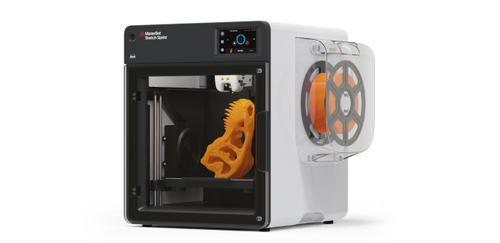
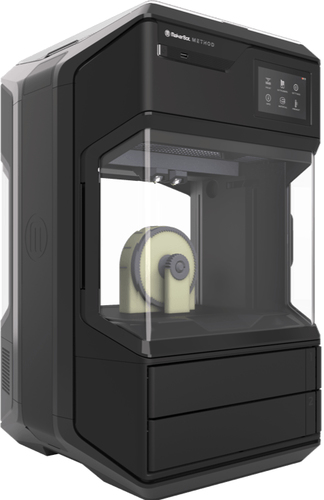
When diving into the world of 3D printing, it's important to understand the core technologies that make it all possible: Fused Deposition Modeling (FDM), Stereolithography (SLA), and Selective Laser Sintering (SLS). Each of these systems serves specific needs and applications. FDM, for instance, is a popular choice among hobbyists and small businesses due to its affordability and ease of use. It works by melting plastic filament and laying it down layer by layer to form the final object. The process is straightforward, making it ideal for creating prototypes or everyday items.
On the other hand, SLA technology uses laser beams to cure resin into hardened plastic. This method is well-suited for projects requiring high precision and detail, like dental models or intricate art pieces. The versatility of SLA can be quite appealing if accuracy is top priority. SLS stands apart by employing lasers to fuse powder materials, usually nylon, into solid objects. This technique offers great strength and functional properties, often seen in industrial applications like aerospace or automotive components. Understanding these technologies can help you choose the right printer for your needs. Curious about more detailed comparisons? Check out this comprehensive guide to pinpoint which type suits your project.Benefits: Why You Might Need a 3D Printer
The advantages of owning a 3D printer extend far beyond just making objects. At its core, 3D printing offers a level of customization that's hard to achieve with traditional manufacturing. Imagine crafting unique jewelry tailored precisely to someone's taste or creating bespoke parts for a custom project—these are just a taste of what's possible.
Rapid prototyping is another noteworthy benefit, especially for businesses aiming to quickly validate design concepts. By reducing the time between ideation and realization, companies can iterate and innovate much faster than before. This speed benefits start-ups trying to get products to market quickly, leveling the playing field with larger competitors. From a cost perspective, 3D printers can prove surprisingly economical. While there's an initial investment, the ability to produce parts on-demand eliminates hefty warehousing costs. Plus, the waste reduction is a boon for eco-conscious enterprises. Even hobbyists joining the 3D printing revolution find value in personal fulfillment, learning new skills, and sometimes even turning a side hobby into a profitable venture. For further insights on making such benefits work for you, explore our article on transforming 3D printing ideas into reality.Practical Applications: Beyond Traditional Printing
3D printing has expanded beyond its initial hype, finding practical applications in various fields. Take education, for example. Teachers are now using 3D printers to create tangible models that help students understand complex subjects—from biology to engineering. These models make learning more interactive and engaging.
In healthcare, 3D printing is nothing short of revolutionary. Consider the creation of custom prosthetics, which can be tailored to fit individual patients perfectly. This not only improves comfort and functionality but also reduces the cost and time associated with traditional prosthetic manufacturing. Medical institutions are also exploring the potential of bio-printing organs, pushing the boundaries of what's possible in medical treatment. Meanwhile, in the manufacturing sector, 3D printers are used for rapid prototyping, enabling companies to test and refine designs before full-scale production. This agility helps businesses stay competitive in fast-paced markets. For a deeper dive into how this technology reshapes industries, browse our detailed exploration of 3D applications and see how these innovations might apply to your field.Is a 3D Printer Worth the Investment?
Deciding whether to invest in a 3D printer depends on various factors. For some, the novelty of creating things from scratch is enough to justify the purchase. However, it's essential to weigh costs against potential benefits. Generally, prices have become more accessible, with entry-level models starting at a few hundred dollars. But high-end models, such as the HP Jet Fusion Series, can cost significantly more. Do they provide a better return on investment? Typically, these premium models offer advanced features like higher precision and faster printing speeds, valuable in demanding industrial environments.
On the other hand, budget-friendly options might suffice for home use or personal projects. It often boils down to specific needs. For instance, if producing detailed prototypes is critical to your business, then a premium model might indeed be worth the splurge. For many, the choice includes considerations for operating costs, such as material expenses and maintenance. It's wise to explore reviews and user experiences. You could also check how these models fit in varied contexts in our comparative insights, helping make a more informed purchase decision.Comparing HP Jet Fusion Products
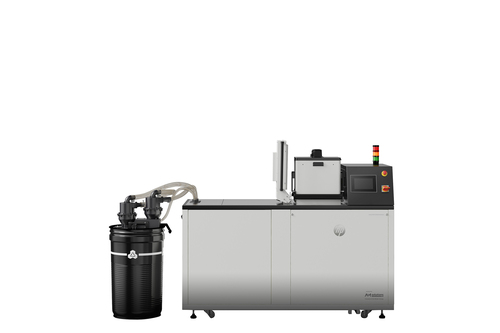
Considering the array of choices in 3D printing, the HP Jet Fusion 5200 Series Automatic Unpacking Station and the HP 3D710 5L Detailing Agent both bring unique strengths. The unpacking station, compatible with several Jet Fusion models, streamlines post-processing, reducing time and labor—a crucial feature for high-volume production settings. It's a game-changer for industries focusing on efficiency and scale (unpacking station discussion).
Meanwhile, the 5L Detailing Agent enhances part quality by providing finer details and smoother finishes. Ideal for manufacturers needing precision, this product complements applications where aesthetics are as important as structural integrity (detailing agent comparison). Evaluating which tool best meets your objectives depends on your focus: operational efficiency or exceptional detail quality.

How to Start Your 3D Printing Journey
Embarking on a 3D printing journey is both exciting and rewarding, but getting started can seem daunting. First, ensure you have a suitable space set up—clean and organized—where your 3D printer can operate safely. Upon unboxing, carefully follow the user's manual for assembly. Install the required software on your computer, which will allow you to design or import 3D models for printing.
Select the appropriate filament or resin compatible with your printer, considering the project requirements. Materials like PLA are great for beginners due to their ease of use and reliability. Regular maintenance is key to longevity; cleaning components and checking for wear can prevent future issues. In time, you'll develop an intuition for troubleshooting common problems. Looking to optimize your setup? Dive into our step-by-step guide for additional tips and tricks.Conclusion
As we wrap up this exploration of 3D printing technologies, it's clear that this innovation is more than a fleeting trend—it's a revolution. Whether for prototyping, manufacturing, or personal projects, 3D printing challenges traditional limits, offering endless possibilities.
Considering your individual or business needs could be the start of embracing this transformative technology. So, take a moment to ponder: How might 3D printing help solve your next big challenge? If you're interested in further discoveries and potential investments, check out our selection at [3D Printers], and dive deeper into the world of 3D innovation.Frequently Asked Questions
Common questions about 3D Printers